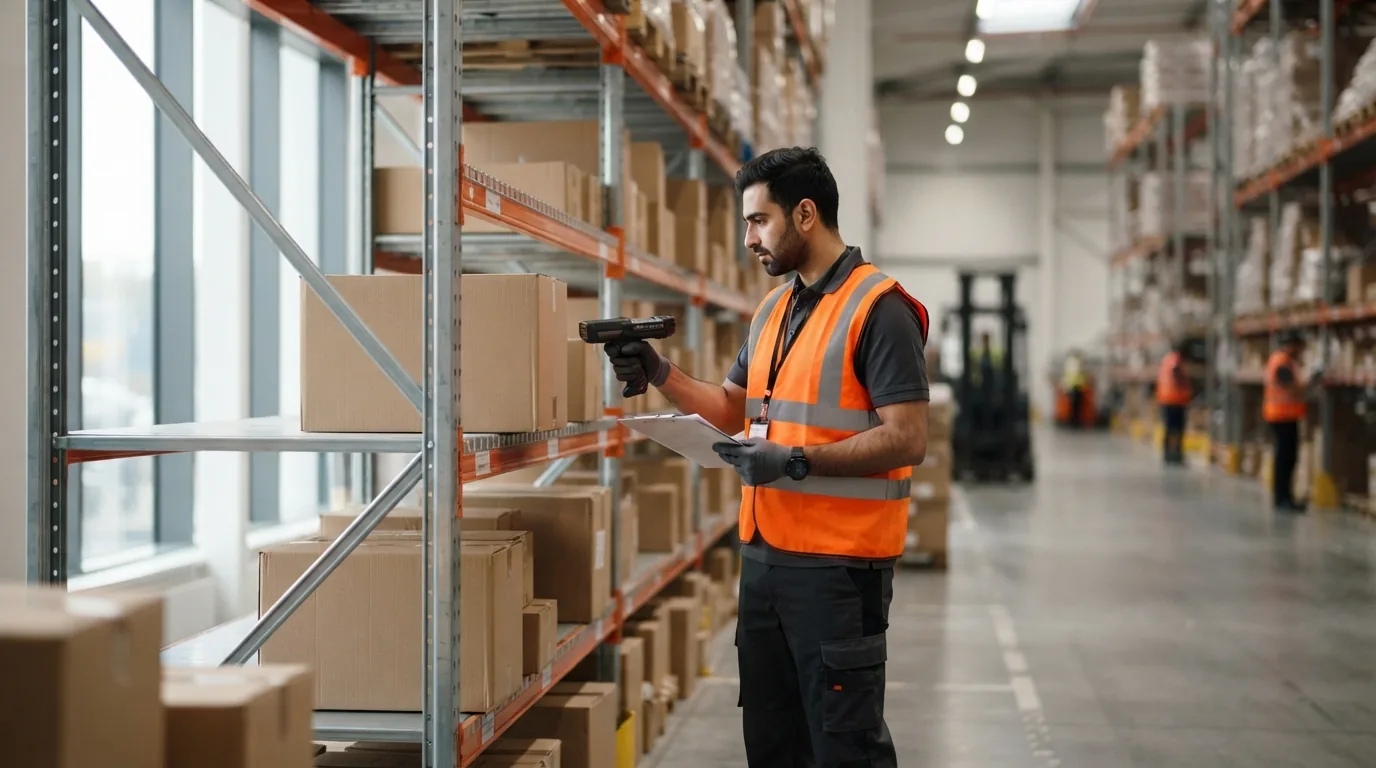
If you want steady work that does not require a college degree, warehouse jobs are one of the most open doors in the American job market. Warehouses hire year-round, train new workers on the job, and often offer more than one shift, which makes them a practical option whether you are starting out, changing careers, or looking for a second income.
That does not mean the work is easy. Warehouse jobs are physical, fast-paced, and measured. This guide explains what the job is honestly like, what employers actually require, how hiring usually works, and how to protect yourself from fake listings — so you can decide if it fits your life before you apply.
What Warehouse Jobs Actually Involve
“Warehouse associate” is a catch-all title. Inside a warehouse, the work is usually split into roles, and your day depends on which one you are assigned to:
- Picking and packing — you collect items from shelves or bins to fill customer orders, then pack, label, and prepare them for shipping. Accuracy matters as much as speed — a wrong item in a box becomes a return.
- Loading and unloading — you move freight on and off trucks, often with a pallet jack or by hand, and sort incoming goods to the right area of the building.
- Stocking and order filling — you receive merchandise, unpack it, check it for damage, and move it to shelves, racks, or staging areas. The BLS groups stockers and order fillers with hand laborers and material movers.
- Shipping and receiving — you check incoming deliveries against paperwork, scan items into the system, and prepare outgoing shipments.
- Equipment operation — some workers operate forklifts, pallet jacks, or other powered equipment. This work requires employer-provided training and evaluation before you operate the equipment on your own — never operate powered equipment you have not been trained to use.
- Inventory and quality checks — you count stock, look for damaged goods, and help keep records accurate so the warehouse knows what it actually has.
Job titles vary by employer. “Warehouse associate,” “order picker,” “material handler,” “package handler,” and “fulfillment associate” often describe similar work. Read the description, not just the title, to learn what a specific opening really involves.
What a Typical Shift Is Really Like
Honesty helps here, because the gap between expectation and reality is why many new warehouse workers quit in the first weeks.
It is physical work. You will spend most of your shift on your feet, walking, bending, lifting, and carrying. The BLS notes that hand laborers and material movers lift and carry heavy objects, that the work is usually repetitive and physically demanding, and that workers may need to bend, kneel, crouch, or work in awkward positions. Some postings list a lifting requirement — read it carefully and be realistic about whether you can meet it safely, shift after shift.
Pace is tracked. Most modern warehouses use scanners and software that record how many items you pick, pack, or move. You will usually have targets. New workers are normally given time to learn, but the pace does not slow down for long. If you prefer work where you set your own speed all day, a warehouse floor may frustrate you.
Schedules vary. Many warehouses run around the clock. The BLS notes that most hand laborers and material movers work full time, although part-time work is common, and that schedules may include nights and weekends. Overnight and weekend shifts exist at many facilities. Ask about the exact shift pattern, overtime expectations, and how schedules are assigned before you accept an offer.
Conditions depend on the building. Some warehouses are climate-controlled. Others are hot in summer and cold in winter. Ask about temperature, required footwear and safety gear, break schedules, and whether water is available on the floor. These details affect your day far more than the job title does.
Safety rules are serious. Warehouses use safety rules standardized through the Occupational Safety and Health Administration (OSHA), and the BLS reports that hand laborers and freight movers have some of the highest rates of injuries and illnesses of all occupations, often from sprains, strains, or overexertion. Follow lifting procedures, report hazards, and never skip safety steps to hit a target. A good employer will back you on that.
What Warehouse Jobs Pay
Pay varies by location, employer, shift, and experience, so always check the pay listed in the actual posting. For a national reference point, the U.S. Bureau of Labor Statistics reports the following median annual wages for May 2025:
- Hand laborers and material movers (overall): $38,220 per year ($18.38 per hour). Half of workers earned more than this amount and half earned less.
- Laborers and freight, stock, and material movers: $40,240 per year.
- Stockers and order fillers: $37,330 per year.
- Packers and packagers: $36,280 per year.
Remember that a median is a midpoint, not a promise. Your pay will depend on where you live, who hires you, and which shift you work. Some employers offer shift differentials for nights or weekends, overtime, or seasonal bonuses — but only the posting and the offer letter can tell you what applies to a specific job.
On outlook, the BLS projects overall employment of hand laborers and material movers to grow 4 percent from 2025 to 2035, about as fast as the average for all occupations, with about 904,200 openings projected each year on average — mostly to replace workers who move to other occupations or leave the labor force. Stockers and order fillers are projected to grow faster, at 9 percent, supported by demand for workers to prepare orders for pickup or delivery.
Requirements: What Employers Actually Ask For
One reason warehouse work is accessible is that the formal barriers are low. According to the BLS, there are usually no formal educational requirements to become a hand laborer or material mover, and workers typically learn through on-the-job training lasting one month or less — some need only a few days. That said, most employers do expect the following:
- Minimum age — usually 18 or older, especially where equipment or late shifts are involved. The posting will state the requirement.
- Physical ability — the ability to stand, walk, lift, and move throughout a shift, up to the weight the posting lists. Be honest with yourself here.
- Reliability — showing up on time, every scheduled shift. In warehouse hiring, a record of reliable attendance often matters more than a long resume.
- Basic reading, counting, and scanning skills — you will read labels, follow pick lists, and use a handheld scanner or similar device.
- Background check and drug screening — many employers require one or both. Requirements vary by employer and state law.
- Authorization to work in the United States — employers will verify this, as the law requires.
You generally do not need prior warehouse experience for entry-level roles. Experience in retail stocking, moving, delivery support, or any physically active job can help, but it is not usually required. If a posting asks for a forklift certification, check whether the employer provides the training — many do, and legitimate employers train and evaluate their own operators.
How to Get Hired: A Practical Step-by-Step
- Decide which shift you can truly work. Night shifts and weekend schedules are common. Choose only what you can sustain, because attendance problems in the first weeks are a common reason new hires do not last.
- Apply directly when you can. Many large employers post openings on their own careers pages, and staffing agencies also recruit heavily for warehouse roles. Either route can be legitimate — just verify who you are dealing with (see the scam section below).
- Keep your resume short and specific. One page is enough. List your work history, any experience with lifting, stocking, scanning, or equipment, and your availability. If you have no work history, list school, volunteer work, or any job where you showed up reliably and followed instructions.
- Be ready for a fast process. Warehouse hiring is often quick. You may be asked to complete an online application, answer basic screening questions, and attend an interview or hiring event within days. Respond promptly to messages from real employers.
- Ask questions before you accept. Good questions include: What is the exact shift and schedule? What is the starting pay, and is there a shift differential? Is overtime mandatory? What does training look like? What safety gear is provided? Is the role seasonal or permanent? A clear answer to these questions protects you later.
- Confirm everything in writing. Before your first day, make sure you have the start date, shift time, location, pay rate, and who to report to in writing — an offer letter or a confirmation email from the employer’s real domain.
Interview Tips for Warehouse Roles
Warehouse interviews are usually straightforward. Hiring managers want to know three things: Can you do the physical work? Will you show up? Will you follow safety rules? Prepare accordingly.
Show up early and dressed for the floor. Clean, practical clothing and closed-toe shoes. You may be given a tour of the facility.
Give direct answers with examples. Instead of “I am a hard worker,” say what you did: “In my last job, I unloaded deliveries every morning and kept the stockroom organized.” Short, specific answers beat long speeches.
Be honest about availability. Saying you can work nights when you cannot will fail in week one. State the shifts you can work and stick to it.
Ask about safety and training. Asking how new workers are trained and how safety issues are reported shows you take the job seriously.
Prepare for simple practical checks. Some employers include a basic assessment, a tour, or a conversation about lifting and pace. This is normal. Ask questions if anything is unclear.
How Warehouse Work Can Lead Somewhere
Warehouse work can be a starting point, not just a stopgap. Workers who show reliability, accuracy, and a good safety record are often considered first when better-paid roles open up — equipment operation, shipping and receiving, inventory control, quality checks, and team-lead or supervisor roles. Learning the warehouse management system, volunteering for cross-training, and keeping a clean safety record all help. Nothing is guaranteed, and advancement depends on the employer, but warehouses promote from within more often than many people expect. Ask during your interview what advancement paths exist at that facility.
Watch Out: Warehouse Job Scams and Red Flags
Fake warehouse listings are common because the jobs are popular and the hiring process is fast. The U.S. Federal Trade Commission (FTC) warns job seekers to watch for these signs:
- You are asked to pay for the job. The FTC states that honest employers, including the federal government, will never ask you to pay to get a job. Fees for training, equipment, certification, background checks, or a “guaranteed” placement are a major red flag.
- You receive a check and are told to send part of it back. This is the fake-check scam. The check will bounce, and your bank will expect you to repay the full amount. A real employer never sends you money and asks you to forward part of it.
- The pay sounds far above normal for the work. The FTC warns that a job promising a lot of money quickly for little effort is almost certainly a scam. Compare the offer against the BLS figures in this guide and the pay in similar local postings.
- The job is vague, or you never applied. Be cautious of offers for roles you never applied to, interviews held only by text or chat app, and descriptions that never name a real facility, location, or employer.
- You are asked for sensitive information too early. Never share your Social Security number, bank account details, or copies of ID documents before you have verified the employer and received a genuine offer through a trusted channel.
- Pressure to decide immediately. Scammers rush you. A real employer will give you time to read an offer and ask questions.
If a listing worries you, verify it: search the company name plus “scam” or “complaint,” check whether the job appears on the employer’s own careers page, and call the company at a number you find yourself — not one the “recruiter” gave you. If you encounter a scam, you can report it to the FTC at ReportFraud.ftc.gov.
Frequently Asked Questions
Do I need experience to get a warehouse job?
Usually not for entry-level roles. The BLS notes there are no formal educational requirements for hand laborers and material movers, and training is typically provided on the job. Experience helps, but reliability and the ability to do the physical work matter most for most openings. Always check the specific posting.
What should I wear to a warehouse interview?
Clean, practical clothing and closed-toe shoes. You may tour the facility, so dress as if you could start work safely. Avoid loose clothing or jewelry that could catch on equipment, and bring ID and any documents the employer asked for.
Are warehouse jobs seasonal?
Some are. Many employers hire extra workers for peak periods, and some seasonal roles become permanent for workers with strong attendance and performance. Ask whether a role is seasonal or permanent, and what the end date is, before you accept.
Is warehouse work safe?
It carries real risks — the BLS reports high injury and illness rates for this occupation group, often from lifting and overexertion. The risks are reduced by proper training, following safety procedures, using provided equipment, and reporting hazards. Ask employers about their training and safety practices, and never skip safety steps to work faster.
Ready to Look for Warehouse Work?
Now you know what the work involves, what employers expect, and how to spot a fake listing. The next step is to browse current openings, read each posting carefully — especially the shift, location, and pay — and apply to the ones that genuinely fit your life.
