Federal government jobs are different from private-sector jobs in one big way: the hiring process is formal, slow, and done through one official website — USAJOBS. That formality puts some people off. But for those who learn the system, federal jobs offer something private employers often do not: clear pay bands, structured benefits, and a hiring process where the rules are written down and the same for everyone.
This guide explains how USAJOBS hiring really works, what a federal application involves, and how to avoid the scams that target federal job seekers — using a real, live example: a Transportation Security Officer (TSO) opening with the Transportation Security Administration (TSA) at Gunnison-Crested Butte Regional Airport in Colorado.
What USAJOBS Is — and What It Is Not
USAJOBS (usajobs.gov) is the federal government’s official job site, run as part of the U.S. Office of Personnel Management (OPM). Every federal agency posts its openings there. If a “federal job” is not on USAJOBS, treat it with suspicion.
USAJOBS is not a recruiter, and it does not hire anyone. It is the front door: you create a profile, find an announcement, and submit an application. The hiring agency then runs its own process — assessments, interviews, background checks — and makes the decision. Applying through USAJOBS is free. Anyone charging a fee to get you a federal job is running a scam.
A Real Example: TSA Transportation Security Officer, Gunnison, CO
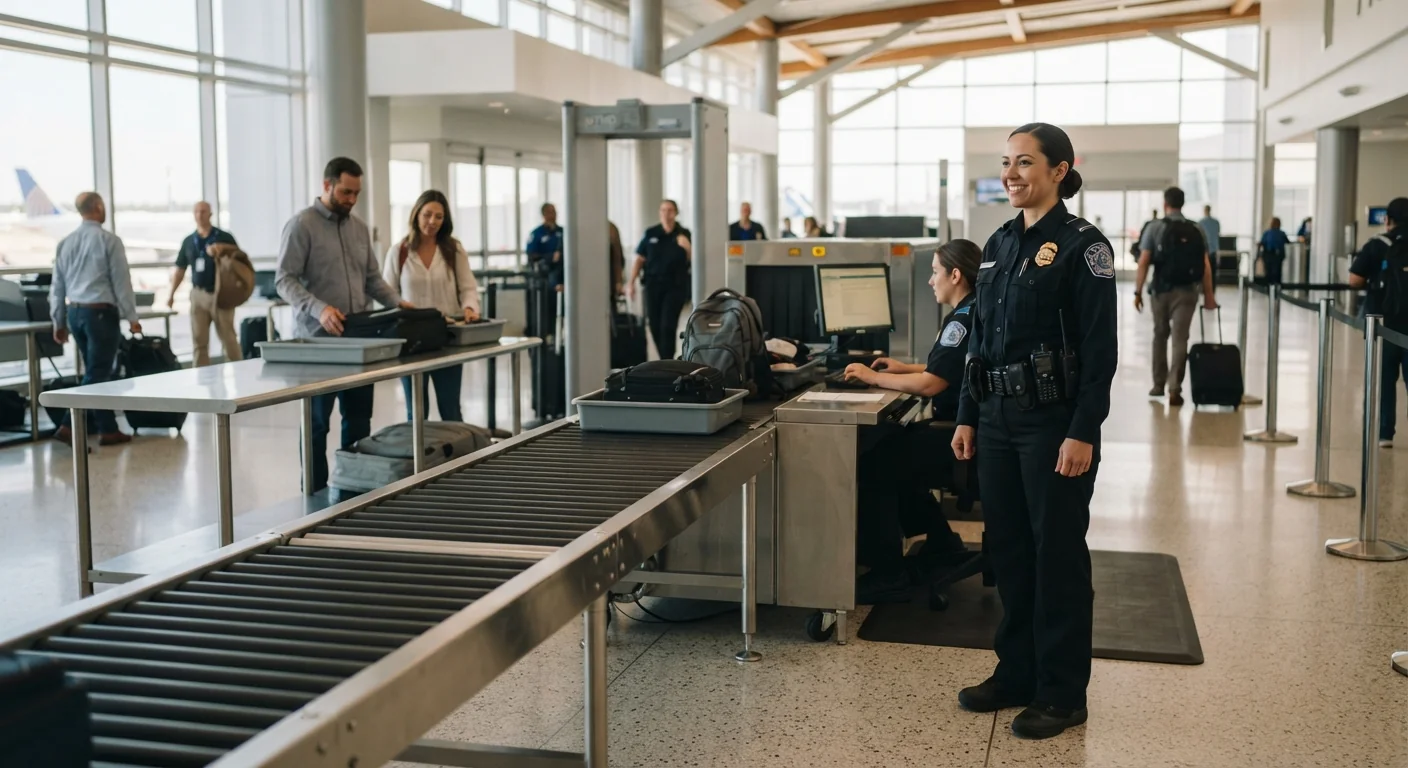
The TSA hires Transportation Security Officers to protect air travelers, airports, and aircraft with courteous, professional security screening. Day-to-day work includes running screening equipment and technology to find dangerous items in baggage, cargo, and on passengers; carrying out searches and screening that can involve physical contact with passengers, bag searches, and lifting bags, bins, and property up to 50 pounds; controlling terminal entry and exit points; helping the public with directions and questions; and staying focused in a noisy, high-pressure setting so threats can be spotted and sound decisions made in routine and emergency situations.
Officers keep building critical-thinking skills, apply risk-based screening procedures, and follow standard operating procedures reliably. This is not a law enforcement position.
Pay for this announcement (as stated on the official USAJOBS posting): $46,105 to $56,844 per year, or $22.09 to $27.24 per hour, including locality pay of 17.06%. TSA is also offering a sign-on bonus of up to $15,000 for this location, paid in two installments during the first 12 months of service; the amount is subject to change or elimination based on operational needs, and any applicable amount is communicated and agreed during the final job offer process. Always check the pay in the actual announcement — pay varies by location and pay band.
Hours: Full-time and part-time. Full-time positions require 40 hours per week; part-time shifts generally range from 16–32 hours per week. Specific shifts and schedules are set by the airport. Shift work may include any day Sunday–Saturday, irregular hours, nights, holidays, overtime, extended shifts, weekend shifts, changing shifts, and split shifts.
Apply early: The announcement may close before its published closing date if enough applications are received. Do not wait until the last day.
What a TSO Shift Is Really Like
Honesty helps here, because the gap between expectation and reality is why many new officers struggle in the first weeks.
It is physical and demanding. The role requires squatting and bending, repeatedly lifting around 50 pounds, walking up to three miles in a shift, and standing for prolonged periods of up to four hours. Be realistic about whether you can meet those demands safely, shift after shift.
It is repetitive — and it has to be. Screening the same way, every time, is the job. Officers who cut corners on procedure are a safety problem, not a time-saver. Attention to detail is assessed throughout hiring for exactly this reason.
The public is part of the job. You will give directions, answer questions, and deal with travelers who are stressed, late, or unhappy about screening. A calm, professional manner matters as much as the technical work.
Training takes you away from home. The role requires possible mandatory travel for training — a minimum of three weeks, up to six weeks, away from the home airport. Ask about training dates and arrangements before you accept.
Requirements: What the TSA Actually Asks For
To qualify at the SV-D pay band (equivalent to GS-5/6), candidates need either (A) at least one year of full-time work in the security industry, aviation screening, or as an X-ray technician, or (B) a high school diploma, GED, HiSET, or TASC equivalency certificate.
Beyond that, candidates must be U.S. citizens or U.S. nationals, at least 18 when applying, registered for Selective Service where required, proficient in English, and able to pass a structured interview, drug screening, medical evaluation, and background investigation, with post-employment random drug and alcohol testing. Applicants must have lived in the United States for three of the last five years (with stated exceptions), must not have delinquent federal or state taxes or past-due child support, and must meet TSA dress, appearance, and certification standards. No moving, relocation, or pre-employment travel expenses are paid.
One detail from this announcement to read carefully: at this time, this airport is only seeking qualified female candidates to meet mission-related staffing needs. Applications from male candidates will be accepted but not considered until staffing needs change. Always read the whole announcement — conditions like this are in the text, not the headline.
How to Apply on USAJOBS: A Practical Step-by-Step
Federal applications follow a fixed sequence. Learn it once and every announcement gets easier.
- Create a Login.gov account, then a USAJOBS profile. USAJOBS uses Login.gov for sign-in. After signing in, select “Create my profile,” fill in the required information — contact information, citizenship and Selective Service information, federal service and military service — and select “Create my profile.” You cannot apply for jobs without a complete profile.
- Build or upload your resume — two pages maximum. From your USAJOBS account, select “Documents” to upload a resume or build one in the account. You can store up to five different resumes. For this TSA announcement, the resume is limited to two pages — follow the limit in the announcement you are applying to. Your resume’s content should reflect the experience, education, and qualifications outlined in the vacancy announcement; a private-sector resume may not meet the requirements of a federal announcement, so tailor it to each job.
- Read the whole announcement before you click Apply. Check the “Who can apply” section, the qualifications, the required documents, and how you will be evaluated. If you are not in the “who can apply” group, your application will not be considered.
- Click Apply and follow the five steps. USAJOBS guides you through: Select Resume, Select Documents, Review Package, Include Personal Information, and Continue Application with the agency. Applying is not finished until you complete the agency’s own system after clicking “Continue to Agency Site” — check that you have actually submitted, not just started.
- Complete the assessment questions and attach required documents. Many announcements include assessment questions you must answer as part of the application, and supporting documents where they apply — for example, a DD-214 or SF-15 for veterans’ preference claims. Missing documents can disqualify an otherwise qualified application.
- Track your application on USAJOBS. After submitting, check your application status on USAJOBS. If it says “Received,” your application is in. Federal hiring is slow — weeks or months of silence is normal, and it does not mean you were rejected.
The TSA Hiring Process After You Apply
For the TSO role, selection involves the TSO Assessment Battery — a computer-based test of X-ray interpretation aptitude — followed, for those who pass, by a structured interview, drug screening, and a job-related medical evaluation, then a pre-hire background investigation.
Candidates are assessed on attention to detail, conscientiousness, critical thinking, flexibility, integrity and honesty, interpersonal skills, oral communication, teamwork, and visual observation. Prepare for the assessment and the interview the same way: by understanding what the job actually involves, not by memorizing answers.
Interview Tips for Federal Roles
Federal interviews are usually structured — the same questions, in the same order, for every candidate, scored against the same criteria. That is good news: preparation works.
- Give direct answers with examples. Instead of “I am detail-oriented,” say what you did: “In my last job, I checked every shipment against its paperwork and caught errors before they left the building.” Short, specific answers beat long speeches.
- Use the announcement’s own words. The qualities listed in the announcement — attention to detail, integrity, teamwork, oral communication — are the qualities being scored. Show each one with a real example.
- Be honest about availability and requirements. Saying you can work nights, travel for training, or pass a medical evaluation when you cannot will fail later in the process. State what you can do and stick to it.
- Ask about the work, not just the pay. Asking how new officers are trained, how shifts are assigned at that airport, and how safety issues are reported shows you understand the job.
How a Federal Job Can Lead Somewhere
Federal work can be a starting point, not just a stopgap. TSA officers who show reliability, accuracy, and a good record are considered for advancement within the agency — lead and supervisory roles, training roles, and specialist positions. Federal pay bands and benefits are structured and published, so you can see what the next step pays before you apply for it. Nothing is guaranteed, and advancement depends on the agency and on openings, but federal careers reward steady, reliable service more than most private-sector roles. Ask during the process what advancement paths exist.
Watch Out: Federal Job Scams and Red Flags
Federal jobs attract scams because they promise stable work and good benefits. The U.S. Federal Trade Commission (FTC) warns job seekers to watch for these signs:
- You are asked to pay for the job. The FTC states that honest employers, including the federal government, will never ask you to pay to get a job. Fees for training, an application, a background check, or a “guaranteed” federal placement are a major red flag. Applying on USAJOBS is free.
- The “job” is not on USAJOBS. A federal opening that exists only on a random website, in a text message, or in an email — and not on usajobs.gov — is almost certainly fake. Verify every federal opening on USAJOBS itself.
- You receive a check and are told to send part of it back. This is the fake-check scam. The check will bounce, and your bank will expect you to repay the full amount. A real employer never sends you money and asks you to forward part of it.
- The pay sounds far above normal for the work. The FTC warns that a job promising a lot of money quickly for little effort is almost certainly a scam. Compare the offer against the pay band in the real USAJOBS announcement.
- Interviews happen only by text or chat app, with no verifiable agency. Be cautious of recruiters who will not do a voice or video call, who use free email addresses, or who cannot point you to a real announcement on USAJOBS.
- You are asked for sensitive information too early. Never share your Social Security number, bank account details, or copies of ID documents before you have verified the employer and received a genuine offer through a trusted channel.
- Pressure to decide immediately. Scammers rush you. A real federal process is slow by design — no genuine federal offer arrives in hours and expires the same day.
If a listing worries you, verify it: search the agency name plus “scam” or “complaint,” check whether the job appears on USAJOBS, and contact the agency at a number you find yourself — not one the “recruiter” gave you. If you encounter a scam, you can report it to the FTC at ReportFraud.ftc.gov.
Frequently Asked Questions
Do I need a Login.gov account to apply for federal jobs?
Yes. USAJOBS uses Login.gov for sign-in, and you need a complete USAJOBS profile before you can apply. Create both before you start applying, so a closing date does not catch you unprepared.
How long is a federal resume?
Follow the announcement. For this TSA announcement, the resume is limited to two pages. USAJOBS lets you store up to five resumes, so you can keep a tailored version for each type of role you apply to.
How long does federal hiring take?
Longer than private-sector hiring — often weeks or months from application to offer, with assessments, interviews, medical checks, and a background investigation in between. Track your status on USAJOBS and keep applying to other roles while you wait.
Can I apply if I have never worked for the government?
Yes — if the announcement is open to the public. Check the “Who can apply” section of each announcement. Many announcements, including this TSA one, are open to all U.S. citizens and U.S. nationals.
Ready to Look for Government Work?
You now know how USAJOBS works, what a federal application involves, and how to spot a fake listing. The next step is to browse current openings, read each announcement carefully — especially who can apply, the qualifications, the pay band, and the closing date — and apply early to the ones that genuinely fit your life.
